U.S. ARMY AIR FORCES
in
CHINA-BURMA-INDIA
WW II Combat Theater
March 1942 - November 1946

The shoulder sleeve insignia of the Army Air Forces (AAF) was approved for wear by all personnel on 23 February 1942. On 2 March 1943, shoulder sleeve insignia were authorized for each overseas air force, and the winged star was limited to those AAF personnel not in overseas commands.
The Army Air Corps (the song's original title) was a "top hit" in 1939. Fueled by the devastating attack at Pearl Harbor on Dec. 7, 1941, the song enjoyed a resurgence of popularity in 1942. With public sentiment in support of our nation at war, the fighting words of The Army Air Corps were suddenly highly appropriate and easy to remember.
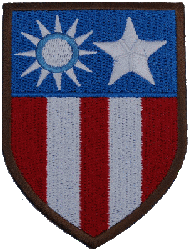
The shoulder sleeve insignia of the China Burma India Theater was approved November 13, 1944, but had seen unofficial use since 1942. The colors and the elements of its design make it one of the most beautiful of all the patches, theater or unit, to come out of World War II.
In 1941 the U.S. made a series of decisions to support China in its war with Japan. Lend Lease supplies were provided after President Franklin D. Roosevelt announced the defense of China to be vital to the defense of the United States. Over the summer, as Japan moved south into French Indo-China, the U.S., Britain and the Netherlands instituted an oil embargo on Japan, cutting off 90% of its supplies.
The U.S. Army Air Forces (USAAF) was created in June 1941 as successor to the Army Air Corps. A component of the U.S. Army, USAAF provided military aviation and controlled its own installations and support personnel. At its peak size, there were 2.4 million men and women assigned with nearly 80,000 aircraft. In 1947 the USAAF became an independent service, the U.S. Air Force.
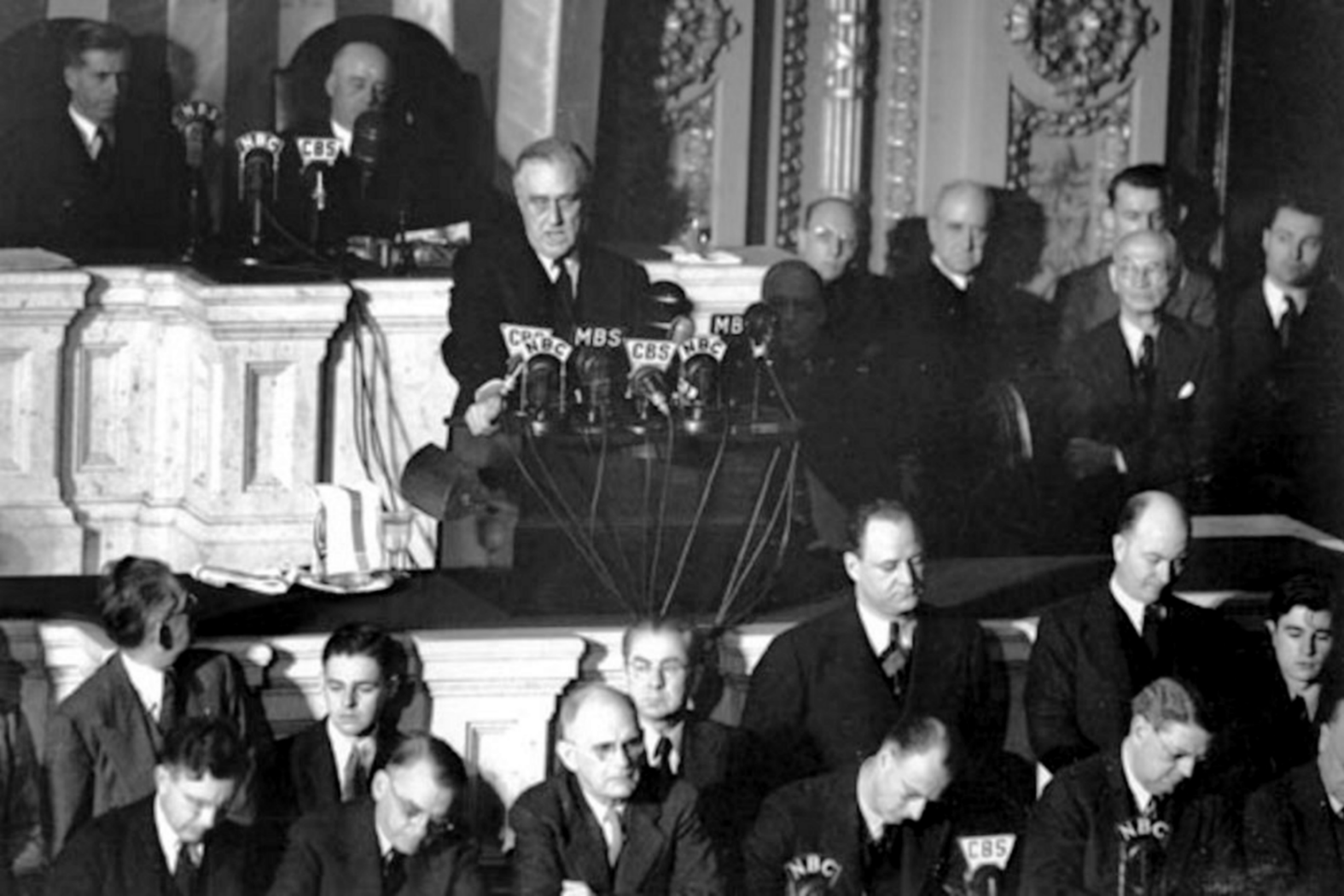
On the 7th and 8th of December, 1941, Japanese Naval and Army Forces performed surprise attacks on the Pearl Harbor area of Hawaii, Malaya, Guam, the Philippine Islands, Wake Island, Midway Island and Hong Kong. The evening of the 8th, President Franklin D. Roosevelt spoke to the combined members of Congress.
Most Americans learned of the Japanese attack the evening of the 8th, when that speech was broadcast by all American radio networks.
Following the Japanese surprise offensive attacks on December 7-8, 1941, Japanese forces quickly moved from Thailand and Sumatra into Burma. By mid-March, Japan had cut off Allied supplies to China that had been coming through British Hong Kong and Burma. China could be supplied only by flying over the Himalaya mountains ("The Hump") from India, or re-capturing territory in Burma and building a new road—the Ledo Road.
China Burma India Theater was the United States military designation during World War II for the China and Southeast Asian or India-Burma (IBT) theaters; the term "CBI" was significant in logistical, material and personnel matters; it was and is commonly used within the USA for these theaters. Operational command of Allied forces (including US forces) in the CBI was officially the responsibility of the Supreme Commanders for South East Asia or China. However, US forces in practice were usually overseen by General Joseph Stilwell, the Deputy Allied Commander in China.
During World War II thousands of men — mostly boys, really — were assigned to USAAF units serving in the CBI theater of war. Their task, at the direction of President Franklin D. Roosevelt and approved by Congress and the American people, was to wage war, to stop an aggressive enemy from enslaving the people and plundering the resources of East Asian countries, specifically China, Burma and India.
These men served their country well! They overcame the hardships, accepted the sacrifices, and performed their duties outstandingly. In spite of their youth and naivete, and despite the isolation of being halfway around the world from those they had vowed to protect, each of them accepted that Freedom is worth fighting, and perhaps dying, for! All of them knew the risks and many, ultimately, sacrificed their lives. Their outstanding accomplishments in, arguably, one of the most difficult theaters of the war emphasize the courage, dedication and ingenuity of all the World War II veterans who defended an ideal and their way of life!
The men made the long trip from the United States of America to the corner of Asia, the "CBI", where they accepted their tasks and performed the work necessary to deprive the enemy of war materials, weapons and sanctuary.
The websites presented here are our tribute to veterans of the U.S. Army Air Forces serving in the China-Burma-India theater during World War II! We are dedicated to sharing as best we can the information related to their experiences while serving their country.
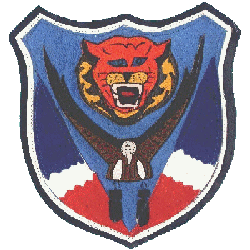
On September 15, 1942, the 341st Bombardment Group (M), AAF, was activated at Camp Malir, Karachi, India, in accordance with General Order #22, HQ, 10th United States Air Force, dated September 3, 1942. Lieutenant Colonel Torgils G. 'Torgi' Wold assumed command. 11th and 22nd Squadrons transferred to it from the 7th Bomb Group and two new squadrons, the 490th and 491st were activated and assigned the following day.

The 308th Bombardment Group (H) was established on 28 Jan 1942, activated at Gowen Field, Idaho the 15th of April, and designated an Operational Training Unit (OTU) on 29 Sep with Wendover Field, Utah as its home. With training completed and the personnel and supplies processed, the 308th Bombardment Group transferred to China, departing Morrison Field, Florida on 15 Feb 1943 with Colonel Eugene H. Beebe commanding.

The LAST RESORT was the American Red Cross (A.R.C.) service club at Yang Chiseh Airbase, Yangkai, China. It was the location of church services and entertainment activities, operating from the early months of 1944 through September 1945. The final touches to the LAST RESORT were envisioned by Barbara Vatter, aka 'Boots', one of fourteen A.R.C. nurses in China, assistant to the Flight Surgeon.

The 16th Combat Camera Unit was activated, Captain Wilfrid M Cline commanding, on 1 May 1943, at First Motion Picture Unit, Roach Studios, Culver City, California. The Unit comprised eight officers and twenty-three enlisted men from a group of volunteers; officers were appointed and the enlisted men interviewed before selection. Training in the use of motion picture and still cameras by Hollywood professionals started immediately, as did physical training.
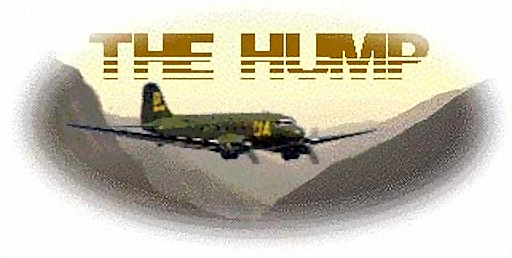
This includes a recreation of Leigh Gough's original, 2000-2001, tribute web page to William 'Bill' Mumford, pilot of C-47 Dakota and C-46 Commando air transports with India-China Wing of Air Transport Command. In addition, we provide Bill's informative emails to us covering various topics about his time in CBI.